
It takes a village to raise a (healthy) child: Expanding Indonesia’s school meal program for planetary health
Indonesia’s most ambitious school meal program is touted as the solution to achieve optimal nutrition and finally tackle stunting in Indonesia’s children. But, in the era of climate change, is MBG truly enough to make a lasting change for planetary health?
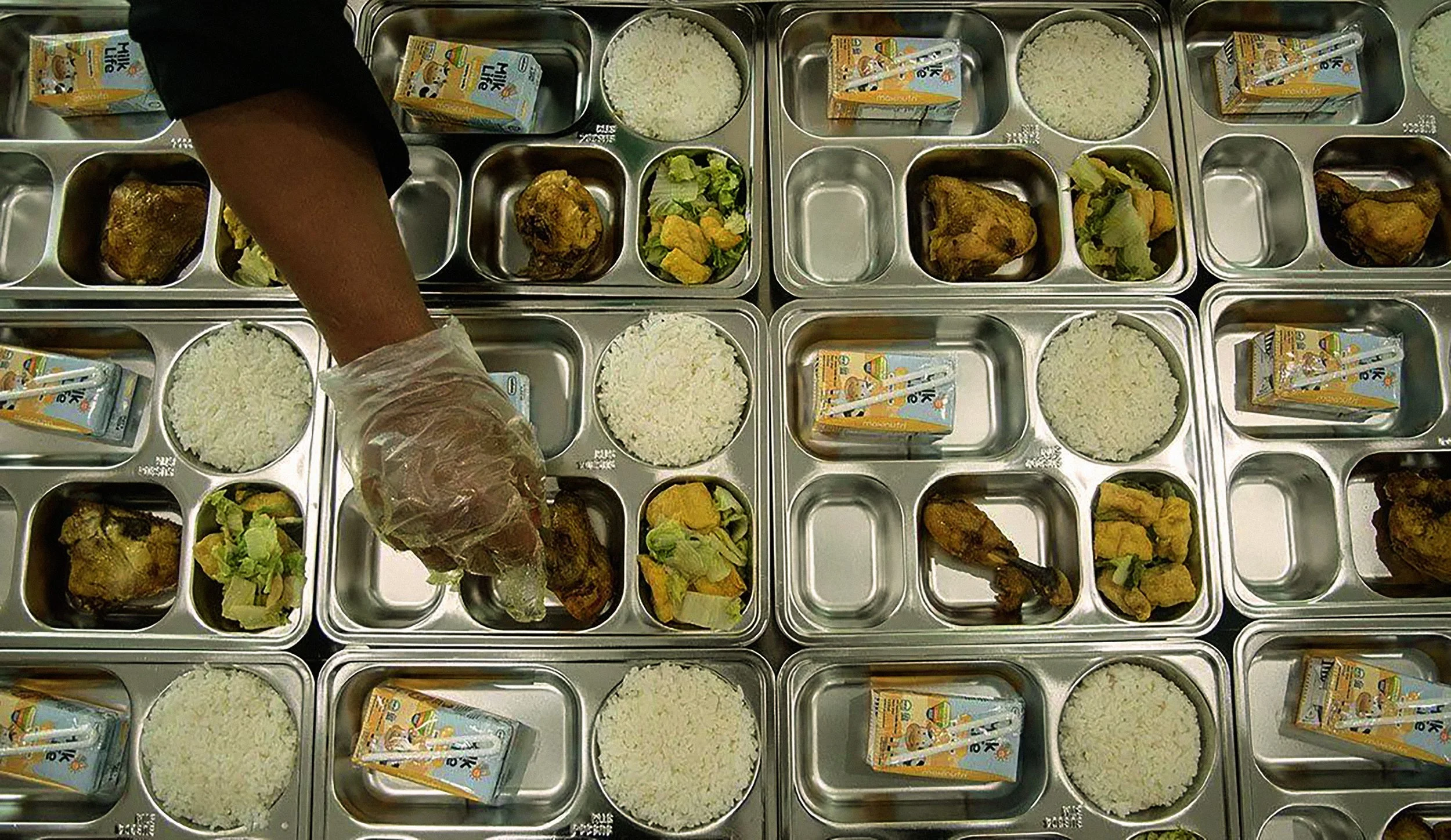
Photo by Novrian Arbi / ANTARA
The appointment of the new presidential administration has generated renewed political momentum for food and nutrition in Indonesia, with several national strategic programs targeting these challenges. Among them is the universal free school meal program, Makan Bergizi Gratis (MBG), aimed to improve the nutritional status of several population groups through wide-scale nutritious meal provision and to help realize the 2045 Golden Indonesia vision.
Targeting school-aged children, children under five, and pregnant and lactating women, the program has, since its launch in January 2025, distributed meals to approximately 90 million beneficiaries nationwide with an annual budget of 71 trillion rupiahs. Despite its scale and ambition, MBG has attracted widespread public criticism, particularly regarding uneven nutritional quality, food safety incidents, massive food waste, and weak local sourcing. More fundamentally, however, the program has been implemented largely in isolation from the structural and infrastructural reforms needed to sustain sustainable healthy diets over time, thereby undermining its potential to catalyze long-term dietary and health objectives.
There is also the question of MBG’s broader contribution to planetary health.
Today, MBG is framed primarily as a nutrition program, yet food does not exist in isolation from nutrition and health; it sits at the intersection of agriculture, ecology, and social justice, to name a few. This interconnectedness is acknowledged in the 2045 Golden Indonesia Vision, which recognizes that human capital development must go hand in hand with environmental sustainability.
Consequently, solutions that fail to address this broader context are less likely to ensure a sustained supply of healthy and environmentally-sustainable foods, weakening MBG’s objectives.
This begs the question: will MBG achieve its goals of improving the health and nutritional status of Indonesia’s Golden Generation, or will its own structural and infrastructural limitations undermine its potential impact? Perhaps more crucially, what improvements are needed to fully realize this potential?
Food as a multifaceted issue
To see whether MBG can achieve its objectives, it is first necessary to understand the factors that shape nutrition outcomes.
Food, and by extension nutrition, does not exist in a vacuum. Food choices arise from a complex interplay of cultural identity, ideological beliefs, economic status, food availability, and personal preferences.
Providing healthy, nutritious food once a day may offer short-term benefits, but this alone does not guarantee long-term behavioral change. Habits form through repeated exposure over sustained periods. In the context of MBG, this means that improving children’s dietary habits and consequently their nutritional status would require ensuring that healthy, fresh foods are available, accessible, and affordable for all.
Unfortunately, this remains a significant challenge in Indonesia. Healthy foods are unaffordable for 68% of the population (CIPS, 2024), while limited cold-chain infrastructure restricts access to fresh produce crucial for balanced diets.
These challenges are compounded by climate change, which threatens food security across multiple dimensions. Ocean acidification, increasing sea-surface temperatures, and overfishing are expected to reduce fish stocks, posing risks to food supplies in an archipelago like Indonesia. Livestock production is also vulnerable to heat stress, water scarcity, and disease outbreaks fuelled by climate change. Extreme weather events, including floods and droughts, have caused crop failures in Java, Indonesia’s main producer of rice, corn, soybeans, and sugar cane. Increasing rainfall variability has intensified pest outbreaks in rice fields, such as golden snails and planthoppers, while declining soil productivity is projected to reduce rice production capacity by 10% in 2050. Growing climate-related risks may push producers to adopt ‘safer’ cereal crops, lowering crop diversity and, in turn, dietary diversity.
The outlook may seem bleak, but thankfully, not all dietary patterns contribute equally to climate change. The planetary health diet (PHD), first introduced in the 2019 EAT-Lancet Commission Report, emphasizes increased consumption of plant-based foods and whole-grains while limiting animal-based products. Initially devised to improve human health, subsequent research has shown that PHD can also reduce the environmental burden of food systems. As a result, it is increasingly promoted as a strategy to return food systems boundaries into a safe and just operating space for humans and Earth.
Indonesia thus faces a double bind of the triple burden of malnutrition and the looming threat of climate change. Overcoming both simultaneously requires a concerted and sustained action. Free meals alone are not sufficient.
What is also needed is a change in values, and ultimately, long-term changes in our eating behaviors toward more sustainable, healthy diets. Achieving this transformation requires conscious effort at the individual and collective levels, beginning with increased awareness of food, nutrition, and ecological issues throughimproved food literacy.
Beyond food provision into food literacy
What is food literacy, you might ask?
According to Truman et al. (2017), food literacy encompasses the knowledge and skills related to food, including the ability to plan, select, prepare, and consume food in ways that help individuals make food decisions that support their personal health and well-being as well as that of the environment.
Although its importance may be underappreciated, research consistently shows that knowledge plays a big role in shaping food choices and dietary behaviors. Higher levels of food and nutrition knowledge in children are associated with healthier and more sustainable dietary choices, as well as durable dietary improvements over time.
Considering these findings, food education may be precisely the missing element of MBG, making each meal an educational opportunity that tells a story about the relationships that sustain our food systems, between us and the Earth, among the many hands involved in food production, and within the communities that share meals together.
Schools around the world have increasingly adopted this experiential approach to food education aimed at fostering healthy and sustainable eating habits that benefit both people and the planet. These activities are often integrated into the respective school meal programs, directly involving children in growing, preparing, and serving meals so that food becomes a lived educational experience rather than a passive consumption activity.
Japan provides a case in point through its Shokuiku program. Originating as a post-World War II school meal initiative in 1949, Shokuiku evolved into a comprehensive national food education policy in 2005. Children not only eat together everyday but also learn about local food cultures, seasonal and sustainable sourcing, and food preparation and cultivation practices. It places food as a public concern, with responsibilities shared across multi-scale, cross-sectoral government agencies and involving private actors, civil society, local agrifood sectors, community members, and families within a unified national framework.
Sustained over more than six decades now, this approach has yielded measurable benefits, including the establishment of long-lasting healthy eating patterns, reduced prevalence of childhood obesity, and increased curiosity and engagement with food and nutrition issues among children.
Beyond health outcomes, experiential food education also supports broader environmental goals. Activities such as gardening, cooking, farm visits, and shared meals provide tangible ways for children to understand food systems, ecological limits, and interdependence. This is particularly important given that our food systems are currently the second-largest contributor to greenhouse gas emissions and a major driver of transgressions of planetary boundaries.
When implemented consistently, integrated food experiences reinforce food and ecological literacy and can support the transition toward planetary health diets while cultivating environmentally ethical behaviors (Sabet & Bohm, 2024). Over time, this approach offers more than a temporary fix, allowing for a fundamental behavioral change that underpinhealthier, more environmentally sustainable, and socially just food systems transformation.
When every plate tells a story
While MBG has the scale to address immediate nutritional gaps, its long-term success depends on whether it can evolve beyond food provision into a collective effort that shapes habits, values, and food environments. When meals are paired with education, community involvement, and supportive food systems, they become more than mere nourishment; they become tools for lasting change. It truly takes a village to raise a healthy child. Nutrition cannot be delivered through a single meal or a program in isolation.
Every dish carries a story of our relationships with one another and with the Earth. Each time a meal is served, it is worth asking: what story does this dish tell, and what values does it carry? Perhaps this perspective can spark broader transformation, not only within MBG but across society, as we may tap into food’s transformative power for planetary health.
References:
Akihiro, M., Mizue, O., & Kyoko, T. (2023). Preparing on-site school lunches improves adolescents’ eating habits: A one-year follow-up. Health Education Journal, 82(3), 263–273. https://doi.org/10.1177/00178969221149261
Aldyan, R. A. (2023). The impact of climate change on water resources and food security in Indonesia. Journal of Law, Environmental and Justice, 1(1).
BAPPENAS. (2019). Ringkasan Eksekutif Visi Indonesia Emas 2045. https://perpustakaan.bappenas.go.id/e-library/file_upload/koleksi/migrasi-data-publikasi/file/Policy_Paper/Ringkasan%20Eksekutif%20Visi%20Indonesia%202045_Final.pdf
FAO. (2022). The State of World Fisheries and Aquaculture 2022. In FAO eBooks. https://doi.org/10.4060/cc0461en
Foodagogik. (2025). Feeding Change: Rethinking makan bergizi gratis for sustainable food Systems Transformation. https://www.foodagogik.id/feeding-change-rethinking-makan-bergizi-gratis-for-sustainable-food-systems-transformation
Kibayashi, E., & Nakade, M. (2024). Associations between Shokuiku during School Years, Well-Balanced Diets, and Eating and Lifestyle Behaviours in Japanese Females Enrolled in a University Registered Dietitian Course. Nutrients, 16(4), 484. https://doi.org/10.3390/nu16040484
Kunitomo, M., Ekuni, D., Mizutani, S., Tomofuji, T., Irie, K., Azuma, T., Yamane, M., Kataoka, K., Taniguchi-Tabata, A., Mizuno, H., Miyai, H., Iwasaki, Y., & Morita, M. (2016). Association between Knowledge about Comprehensive Food Education and Increase in Dental Caries in Japanese University Students: A Prospective Cohort Study. Nutrients, 8(3), 114. https://doi.org/10.3390/nu8030114
Kuwahara, M., & Eum, W. (2022). Effects of Childhood Nutrition Education from School and Family on Eating Habits of Japanese Adults. Nutrients, 14(12), 2517. https://doi.org/10.3390/nu14122517
McManus, S., Pendergast, D., & Kanasa, H. (2025). The Intersection Between Food Literacy and Sustainability: A Systematic Quantitative Literature review. Sustainability, 17(2), 459. https://doi.org/10.3390/su17020459
Mushi, E., Alphonce, R., Waized, B., Muhanga, M., Khalili, N., & Rybak, C. (2025). Influence of consumer socio-psychological food environment on food choice and its implications for nutrition: evidence from Tanzania. Frontiers in Nutrition, 12, 1589492. https://doi.org/10.3389/fnut.2025.1589492
OECD. (2022). Food for thought: School meals for sustainable societies. https://www.oecd.org/content/dam/oecd/en/publications/reports/2023/05/food-for-thought-school-meals-for-sustainable-societies_9bdf292d/629a2730-en.pdf
Oudat, Q., Messiah, S. E., & Ghoneum, A. D. (2025). A Multi-Level Approach to Childhood Obesity Prevention and Management: Lessons from Japan and the United States. Nutrients, 17(5), 838. https://doi.org/10.3390/nu17050838
Rappleye, J., Komatsu, H., & Nishiyama, S. (2024). School food, sustainability, and interdependence: learning from Japan’s Shokuiku? Oxford Review of Education, 51(1), 129–147. https://doi.org/10.1080/03054985.2023.2296097
Sabet, F., & Böhm, S. (2024). Towards sustainable school food: An experiential planetary health framework integrating meals and food education. British Educational Research Journal, 51(2), 826–847. https://doi.org/10.1002/berj.4100
School Meal Coalition. (2023). School Meals Case Study: Japan. https://schoolmealscoalition.org/sites/default/files/2024-05/MEXT_MAAF_2023_School_Meals_Case_Study_Japan.pdf
Suprapto, F. A., Praditya, E., Dewi, R. M., & Adiyoso, W. (2025). View of a policy implementation review of the Free Nutritious Meal (MBG) Program. The Journal of Indonesian Sustainable Development Planning, 6(2). https://journal.pusbindiklatren.bappenas.go.id/lib/jisdep/article/view/798/265
Thornton, P. K., Boone, R. B., Villegas, R., & Armando, J. (2014). Climate Change Impacts on Livestock. CGIAR. https://cgspace.cgiar.org/items/5593fac1-301d-4ca4-9e72-baabf2e5cbd2
Truman, E., Lane, D., & Elliott, C. (2017). Defining food literacy: A scoping review. Appetite, 116, 365–371. https://doi.org/10.1016/j.appet.2017.05.007
Wierik, S. T., DeClerck, F., Beusen, A., Gerten, D., Maggi, F., Norberg, A., Noone, K., Schulte-Uebbing, L., Springmann, M., Tang, F. H. M., De Vries, W., Van Vuuren, D., Vermeulen, S., & Rockström, J. (2025). Identifying the safe operating space for food systems. Nature Food, 6(12), 1153–1163. https://doi.org/10.1038/s43016-025-01252-6
Yamaguchi, M., Kondo, N., & Hashimoto, H. (2018). Universal school lunch programme closes a socioeconomic gap in fruit and vegetable intakes among school children in Japan. European Journal of Public Health, 28(4), 636–641. https://doi.org/10.1093/eurpub/cky041