
How do people read changes in nature when the seasons no longer arrive as expected?
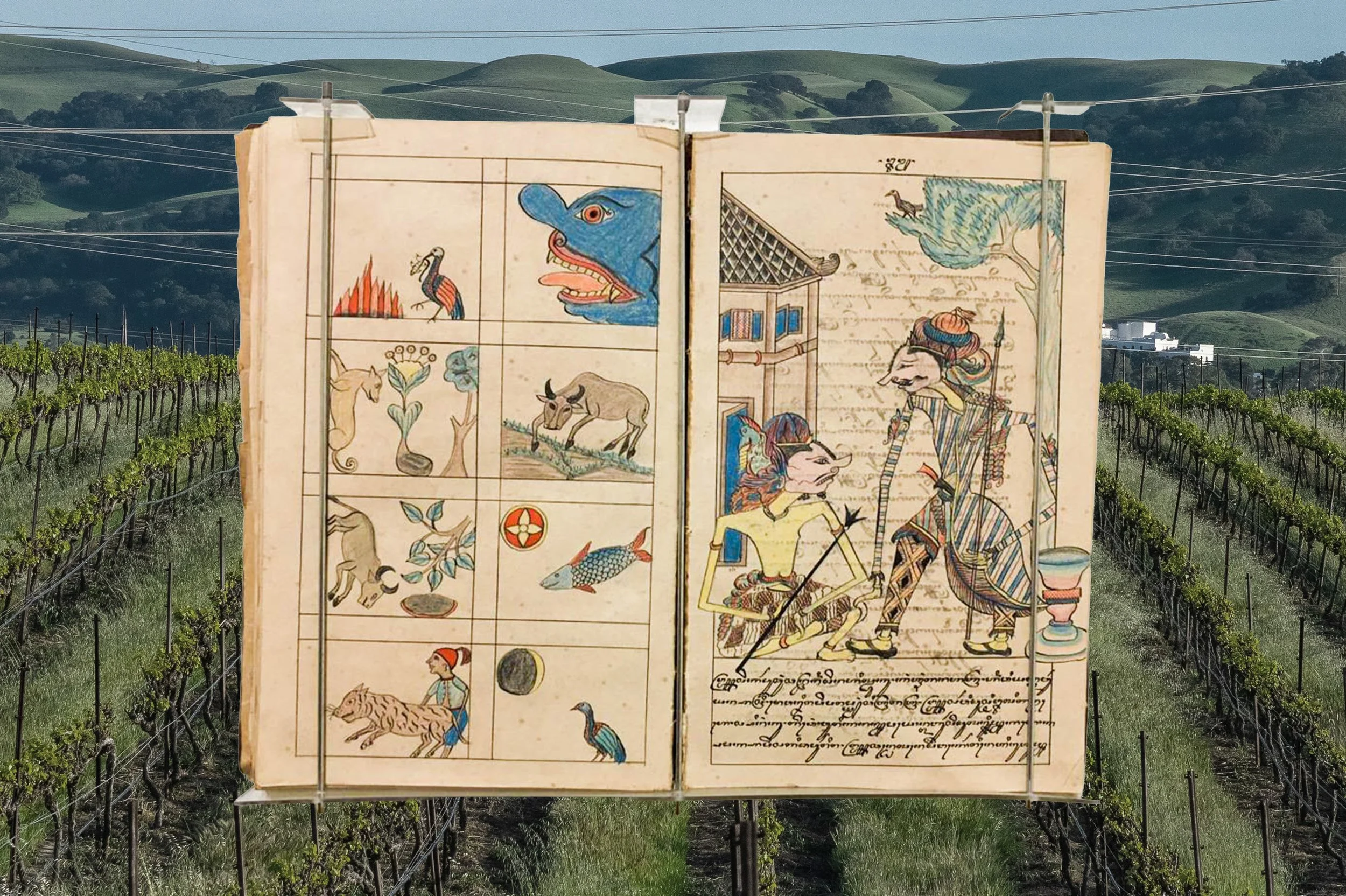
Photo by Spencer Demera / Unsplash and Naskah Beraksara Jawa / Wikimedia Commons
Long before modern weather forecasts became available, the people of Java developed Pranata Mangsa, a traditional calendar system that helps farmers understand seasonal transitions and determine the appropriate time for planting. This knowledge records the movements of nature while reflecting the relationship between humans, the environment, and food sustainability.
Today, amid a climate crisis that is altering seasonal patterns, Pranata Mangsa has found renewed relevance as a source of knowledge that can, and should, be reinterpreted for a climate adaptation strategy based in cultural and artistic practices.
What is Pranata Mangsa?
Knowledge associated with Pranata Mangsa has been shaped by observations and experiences passed down through generations. Throughout history, the Javanese agricultural calendar has connected farming activities with environmental conditions and the lives of rural communities. Pranata Mangsa is therefore a testament to the intricate relationships between human civilizations and Earth’s natural systems.
The traditional Pranata Mangsa calendar divides the agricultural year into twelve periods of unequal length, each known as a mangsa (season). Unlike the Gregorian calendar, these periods are not based on uniform astronomical intervals; rather, on ecological patterns observed across generations.
Particular attention is given to the rainy season, which is generally expected to begin during Kalima (October 14–November 9), marked by the appearance of caterpillars and the budding of tamarind leaves, among others. The season typically reaches its peak during Kapitu (December 23–February 3), characterized by heavy rainfall, widespread plant growth, and the occurrence of floods or waterborne diseases.
Pranata Mangsa also takes material form. One example is the Papan Sangatan, an engraved wooden board used to assist with traditional calculations. Its surface features grids, dots, lines, and symbols arranged according to specific meanings. The Yogyakarta Special Region Government notes that Papan Sangatan has become a rare object that needs to be preserved, as does the practice of Pranata Mangsa itself.
Pranata Mangsa and the challenges of the modern world
However, preserving this heritage also requires an understanding of the changes underway on Earth today.
The climate crisis presents challenges to knowledge systems that depend on seasonal regularity. Shifting rainfall patterns, increasingly unpredictable dry seasons, and growing weather uncertainty mean that past experiences can no longer always serve as reliable references. For farmers, these changes influence how they plant and, in turn, may negatively affect food production, land management, and livelihoods.
Generational differences among farmers present another challenge. Older farmers tend to view Pranata Mangsa as a structured archive that guides their decisions. Meanwhile, younger generations are less familiar with its astronomical references, yet continue to refer to Pranata Mangsa symbolically as a marker of cultural belonging.
The question, then, is not simply how to preserve traditional knowledge, but how communities interpret and transmit it amid contemporary climate conditions and modernization.
Bringing art into scientific discourses
Art offers a way to bring Pranata Mangsa beyond the boundaries of agricultural practices. Through performance, music, dance, storytelling, and collective artistic practices, knowledge of the seasons can be shared anew in ways that remain accessible to future generations. One relevant example is the Gatholoco performing arts group, which was developed in Magelang, Central Java. The lyrics sung during Gatholoco performances tell stories about the practice of Pranata Mangsa.
The story of Gatholoco, featured by Kompas.id in the article Gatholoco Rises from the “Dead”, recounts how one of the many songs performed by this artistic collective, titled “Mangsa Kasa,” presents guidance on choosing the right time to carry out agricultural activities.
Gatholoco dances also follow a recurring pattern: movements in a straight line, followed by circular movements, before returning to a straight line. This choreography represents climate change and suggests that, ultimately, everything must return to its roots: nature. The dance is performed by both male and female dancers to reflect the forces of nature and the fertility of ecosystems. On many occasions, the dancers also incorporate animal symbols into their performances.
These artistic practices are believed to embody teachings that encourage a return to the wisdom of nature. Reviving them is therefore important not only for preserving a performance tradition or an art form, but also for safeguarding the knowledge and connection with nature embedded within it.
In other words, art collectives can serve as bridges between local knowledge and public discourse related to food systems and planetary health. Collaboration between farmers, elders, researchers, and local communities can document knowledge at risk of disappearing while opening space to question the changes taking place around us.
Yet, how can Pranata Mangsa and other traditional climate adaptation strategies remain meaningful as the climate changes? Can knowledge passed down through generations adapt to 21st-century modernization and crises without losing its cultural significance?
Art and culture make it possible to discuss food issues through the experiences of people who directly face global environmental change. However, art cannot replace nutrition-sensitive climate policies, land protection, or equitable access to land and water. Its role lies is to raise awareness, bring different forms of knowledge into dialogue, and broaden how society understands the crisis. Any effort to preserve this knowledge must leave the communities who hold it in control of how their heritage is used and passed on.
To engage with Pranata Mangsa today is to recognize that food systems depend on reading the patterns of a living system, and that traditional knowledge has always changed along with its time.
References:
Harian Kompas, T. (2023, December 10). Gatholoco bangkit dari ”mati”. Kompas.Id. https://www.kompas.id/artikel/gatholoco-bangkit-dari-mati
Ghofur, M. (2025). Persisting pranata mangsa: The challenges of traditional knowledge practices in the era of climate crisis. Jurnal Pemikiran Sosiologi, 11(2), 101. https://doi.org/10.22146/jps.v11i2.101311
Pemerintah Daerah Istimewa Yogyakarta. (n.d.). Jogjaprov - portal resmi pemerintah daerah DIY. Portal Resmi Pemerintah Daerah DIY. Retrieved October 27, 2026, from https://jogjaprov.go.id/berita/papan-sangatan-pranata-mangsa-kalender-unik-berbasis-kearifan-lokal