
Beyond the plate: Why malnutrition is not only a food intake problem
What Indonesia’s malnutrition crisis reveals and why food provision alone cannot fix it.
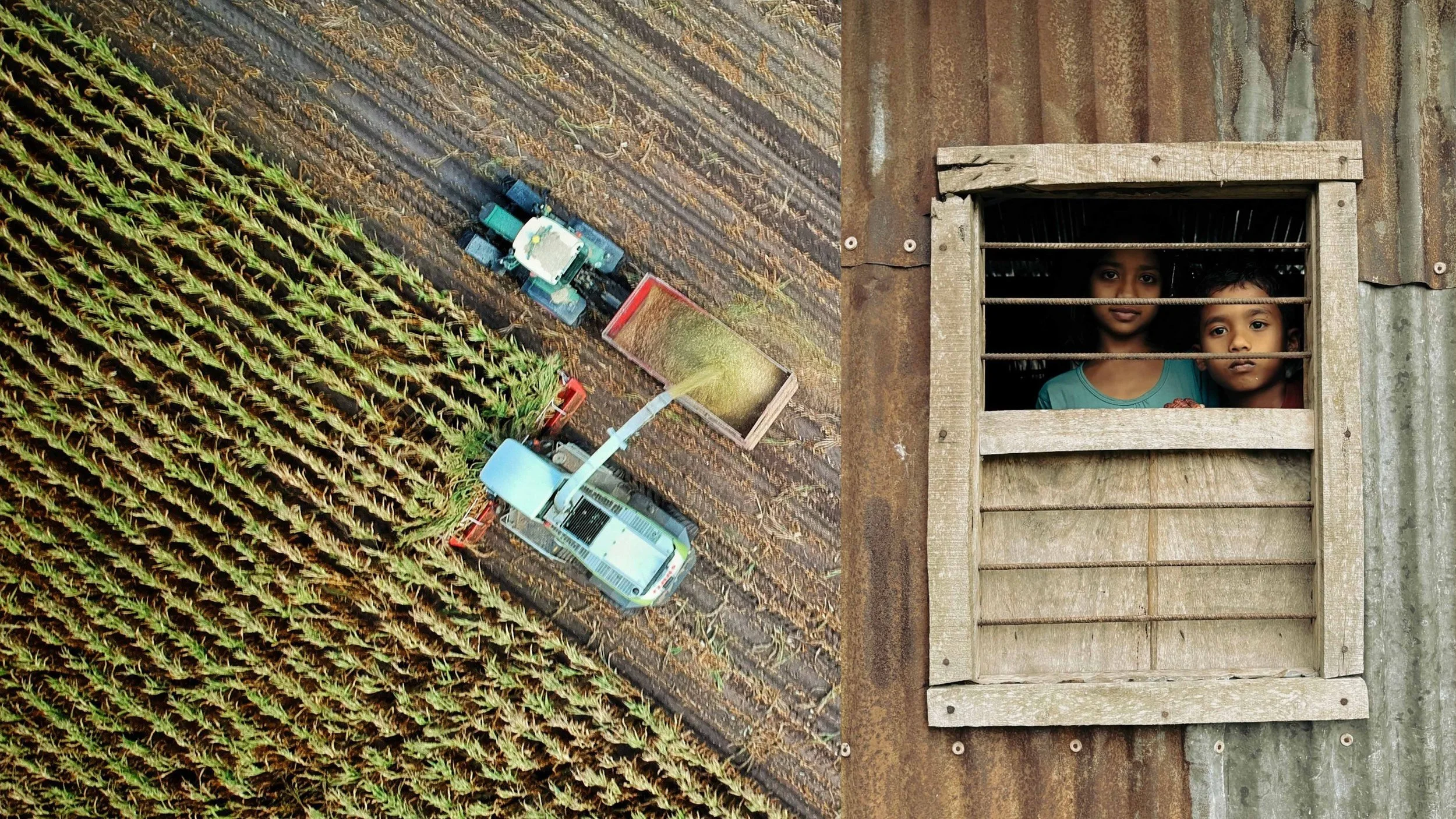
Photo by James Baltz & Bushra Islam / Unsplash
Indonesia's struggle with malnutrition presents a paradox. Over the past decade, the country has made significant progress to reduce its prevalence of malnutrition, yet it persists in many forms. Despite dedicated efforts to expedite stunting reduction, 1 in 5 children is stunted, while rapid nutrition transition has simultaneously driven rising consumption of ultra-processed foods, which leads to a growing prevalence of obesity and diet-related chronic diseases. These developments are further complicated by a deepening ecological crisis. The very processes that increased food availability and provided livelihoods for millions, agricultural intensification and industrial food production, have also degraded the ecological systems Indonesia's food security depends on. Extreme weather, shifting rainfall, and biodiversity loss now threaten the food security and nutritional outcomes these same processes sought to improve.
These challenges are not separate crises, but interconnected manifestations of a deeper systemic problem. Yet policy responses have repeatedly defaulted to food provisioning and food-based solutions, addressing surface symptoms rather than the structural, socioeconomic, and ecological root causes that produce them. This raises an important question: why do nutrition interventions so often stop at the plate, and how can Indonesia design food and nutrition policies that address malnutrition at its roots, preserving not just human health, but also the socioeconomic and ecological systems that sustain it?
Malnutrition: The wicked problem
Malnutrition is widely understood as resulting from an imbalance in nutritional intake. Excess energy intake will be stored as body fat, which can contribute to diet-related diseases such as overweight, obesity, diabetes mellitus (DM), and cardiovascular diseases (CVD). Conversely, inadequate intake of energy and other essential nutrients can lead to adverse long-term effects, including weakened immune function, delayed physical growth, and impaired cognitive development. In children, chronic undernutrition during the first 1,000 days of life manifests most visibly as stunting: a condition in which a child's height falls more than two standard deviations below the median for their age, reflecting not a single episode of hunger but a sustained failure of nutritional adequacy over a critical developmental window.
However, this biological account cannot explain why malnutrition is disproportionately distributed across regions and socioeconomic status. Children in Papua, Maluku, and Nusa Tenggara have a 33 to 83% and 44 to 121% higher prevalence of undernutrition and chronic undernutrition, respectively, than those in Java and Bali . On the other hand, adults in more affluent areas like Java and Bali possess twice the obesity risk of those in less wealthy areas. Beyond geographic factors, these findings reflect socioeconomic disparities as families in rural and impoverished areas like East Nusa Tenggara struggle to access healthy foods due to limited availability and lower purchasing power, compared to families in more urbanized and wealthier regions such as Java and Bali. These gaps run deeper than income. In rural East Nusa Tenggara, patriarchal norms restrict women’s time and access to nutritional knowledge while local food taboos, such as the prohibition of eating fish for children, contribute to a higher prevalence of malnutrition among the next generation.
Climate change also contributes to the malnutrition crisis through additional pathways. Delayed monsoons disrupt crop production, limiting their availability and accessibility for the public. Increased concentration of atmospheric CO₂ reduces nutrient content in crops, especially protein and minerals, indicating that even when food is available, its nutritional quality is diminishing. The threat goes beyond the harvest and affects human health. In West Sumatra, 30.9% of malnutrition cases were linked to vector-borne diseases such as malaria and diarrhea which disrupt nutrient absorption, increasing the risk for acute undernutrition.
Together, these examples reveal that malnutrition is a convergence rather than a single problem with a single cause.
This convergence makes malnutrition resistant to food-only solutions and needs interventions that produce change durable enough to outlast any single program or administration.
The Syndemic approach
One such approach that has attempted to address this complexity is the syndemics framework, which advocates tackling the systemic drivers underlying interconnected issues simultaneously through cross-sectoral collaboration and multi-level action. Central to this is a commitment to social justice: addressing social determinants of health and climate change, reducing structural inequalities, and ensuring meaningful community involvement.
For Indonesia, this would mean designing food and nutrition programs that integrate health, agriculture, and environmental objectives from the beginning. Yet, this integration has proven to be difficult to achieve in practice. The Free Nutritious Meal (Makan Bergizi Gratis/MBG) is a case in point. The nation-wide school feeding initiative promised to achieve all three purposes: improve nutrition for children and vulnerable populations, support local economies by direct procurement from local farmers, and promote sustainable food production and consumption habits. Yet, in practice, the program has fallen short of the integration.
Ever since its implementation, it has been marred by food poisoning cases, which has affected over 13,000 beneficiaries. Its own effect on local food security has also been questioned, with a study finding that the presence of the Nutrition Fulfillment Service Unit (Satuan Pelayanan Pemenuhan Gizi/SPPG) increased local food prices by 0.08% for every ten SPPGs, undermining food accessibility for local communities. The program’s broader socioeconomic impact was further weakened by its own design. The strict quality standards and large capital needs favor large vendors by design, excluding local smallholder farmers and micro, small, and medium enterprises (MSMEs) from participation. Additionally, despite the wide availability of local crops such as maize, sorghum, tubers, and local legumes, the kitchens prefer to serve instant, ultra-processed products like biscuits and cereals. Regarding environmental aspects, the program has generated 624,000 tonnes of food waste in 2025, emitting an estimated 200,760 tons of CO₂ eq/year, adding to Indonesia’s already significant food loss and waste footprint.
These disparate issues are what happens when a nutrition program is designed within a single sector, that is meals delivered, while leaving the consequences for other sectors (agriculture, economy, and environment) to be managed elsewhere.
This is precisely where the syndemics framework offers the most traction for Indonesia. Harmonizing between health, socioeconomic, and environmental goals is possible, as can be seen with Brazil’s school meal program, Programa Nacional de Alimentação Escolar (PNAE). PNAE was not designed merely to provide meals for children but to do so in a way that strengthens the economic and ecological systems that sustain them. The program delivers nutritionally balanced and culturally appropriate meals rich in nutrients while also supporting local livelihoods and preserving sustainable growing practices as well as local biodiversities by mandating that at least 30% of procurement comes from family farming and including local underutilized crops in its menu. Therefore, PNAE’s co-benefits were not incidental outcomes, but were created through a deliberate, equity-centered, multi-level policy design that the syndemics approach demands.
Ultimately, malnutrition in Indonesia will not be solved by filling plates alone. It requires transforming the social, economic, and environmental systems that shape access to healthy food. The syndemics framework offers a path forward by addressing nutritional challenges alongside the inequities and ecological pressures that sustain them. For Indonesia, this means reimagining food policies and programs, including school meal initiatives, as tools for food systems transformation rather than food provision alone. Local farmers and food businesses should be embedded within procurement systems, while meals should serve as opportunities to cultivate nutrition literacy, environmental awareness, and appreciation for local food cultures. By aligning health, livelihoods, and sustainability, nutrition programs can generate benefits that extend far beyond the dining table. In the end, success should be measured not by the number of meals served, but by whether Indonesia builds a food system that is more equitable, resilient, and capable of nourishing both people and the planet for generations to come.
References:
Anyanwu, O. A., Naumova, E. N., Chomitz, V. R., Zhang, F., Chui, K., Kartasurya, M. I., & Folta, S. C. (2022). The Socio-Ecological Context of the Nutrition Transition in Indonesia: A Qualitative Investigation of Perspectives from Multi-Disciplinary Stakeholders. Nutrients, 15(1), 25.https://doi.org/10.3390/nu15010025
Ayuningtyas, D., Hapsari, D., Rachmalina, R., Amir, V., Rachmawati, R., & Kusuma, D. (2022). Geographic and Socioeconomic Disparity in Child Undernutrition across 514 Districts in Indonesia. Nutrients, 14(4), 843.https://doi.org/10.3390/nu14040843
Baldi, G., Martini, E., Catharina, M., Muslimatun, S., Fahmida, U., Jahari, A. B., Hardinsyah, Frega, R., Geniez, P., Grede, N., Minarto, Bloem, M. W., & De Pee, S. (2013). Cost of the Diet (CoD) Tool: First Results from Indonesia and Applications for Policy Discussion on Food and Nutrition Security. Food and Nutrition Bulletin, 34(2_suppl1), S35–S42.https://doi.org/10.1177/15648265130342s105
Beach, R. H., Sulser, T. B., Crimmins, A., Cenacchi, N., Cole, J., Fukagawa, N. K., Mason-D’Croz, D., Myers, S., Sarofim, M. C., Smith, M., & Ziska, L. H. (2019). Combining the effects of increased atmospheric carbon dioxide on protein, iron, and zinc availability and projected climate change on global diets: a modelling study. The Lancet Planetary Health, 3(7), e307–e317.https://doi.org/10.1016/s2542-5196(19)30094-4
Cia, W. M. B., Hamdani, M., & Putra, M. Y. A. (2026). Evaluation of the Free Nutritional Meal Program (MBG) policy in Indonesia based on William N. Dunn’s perspective. Dialektika, 24(1).
De Sousa, A. A., Da Silva, A. P. F., De Azevedo, E., & Ramos, M. O. (2015). Cardápios e sustentabilidade: ensaio sobre as diretrizes do Programa Nacional de Alimentação Escolar. Revista De Nutrição, 28(2), 217–229.https://doi.org/10.1590/1415-52732015000200010
Dwiyanti, D., Barlian, E., Razak, A., Dewata, I., Syah, N., Riviwanto, M., & Yasril, A. I. (2026). Malnutrition Due to Climate Change in West Sumatra using Structural Equation Modeling with Partial Least Square Approach. Jurnal Kesehatan Masyarakat, 21(3), 579–588.https://doi.org/10.15294/kemas.v21i3.23931
Hasyim, I. (2025). Free nutritious meal expected to generate 624,000 tons of food waste per year. Tempo. https://en.tempo.co/read/1964158/free-nutritious-meal-expected-to-generate-624000-tons-of-food-waste-per-year
Hendriadi, A., Benyamin, B., Djafar, M. J., Yohanes, H., Jamal, I. B., Koeslulat, E. E., Sumarno, L., Budiyanto, A., Raharjo, Y. P., & Hadipernata, M. (2024). Carbon footprint in the Agri-Food industry in Indonesia: An analysis of current trends and future directions. IOP Conference Series Earth and Environmental Science, 1358(1), 012012. https://doi.org/10.1088/1755-1315/1358/1/012012
Hermawati, L., Abdullah, M. N. A., & Rizaldi, M. R. (2025). Dampak kebijakan makan bergizi gratis pada pedagang kantin: Sebuah analisis Teori konflik Max Weber. Jurnal Ilmiah Wahana Pendidikan, 11(10D).
Hidayah, I., & Askar, M. W. (2026). Program Makan Bergizi Gratis (MBG), nilai tukar rupiah, dan dinamika harga pangan: Apakah ekspansi SPPG berkaitan dengan tekanan harga lokal? CELIOS.https://celios.co.id/free-nutritious-meals-program-mbg-rupiah-exchange-rate-and-food-price-dynamics-is-the-expansion-of-sppg-associated-with-local-price-pressures/
Lane, M. M., Gamage, E., Du, S., Ashtree, D. N., McGuinness, A. J., Gauci, S., Baker, P., Lawrence, M., Rebholz, C. M., Srour, B., Touvier, M., Jacka, F. N., O’Neil, A., Segasby, T., & Marx, W. (2024). Ultra-processed food exposure and adverse health outcomes: umbrella review of epidemiological meta-analyses. BMJ, 384, e077310.https://doi.org/10.1136/bmj-2023-077310
Makambombu, S. (2026). Local Food, Centralized Governance, and the Limits of Policy Localization in Indonesia’s Free Nutritious School Meal Program: Evidence from Sumba. The Journal of Indonesia Sustainable Development Planning, 7(1), 70–84. https://doi.org/10.46456/jisdep.v7i1.946
Mann, J., & Truswell, A. S. (Eds.). (2012). Essentials of Human Nutrition (4th ed.). Oxford University Press.
Mariyono, J., Kuntariningsih, A., Suswati, E., & Kompas, T. (2018). Quantity and monetary value of agrochemical pollution from intensive farming in Indonesia. Management of Environmental Quality an International Journal, 29(4), 759–779.https://doi.org/10.1108/meq-03-2017-0030
Muharram, F. R., Tjandra, S., Madani, N. J., Rokx, C., & Abdullah, A. (2025). Trends in the double burden of malnutrition among Indonesian adults, 2007 to 2023. Scientific Reports, 15(1), 34883.https://doi.org/10.1038/s41598-025-17348-9
Nabuasa, C. D., Juffrie, M., & Huriyati, E. (2016). Riwayat pola asuh, pola makan, asupan zat gizi berhubungan dengan stunting pada anak 24–59 bulan di Biboki Utara, Timor Tengah Utara, Nusa Tenggara Timur. Jurnal Gizi Dan Dietetik Indonesia (Indonesian Journal of Nutrition and Dietetics), 1(3), 151.https://doi.org/10.21927/ijnd.2013.1(3).151-163
Ranieri, G. R., Madeira, N. R., Slater, B., De Toledo Marchesi, M., De Oliveira, M. a. D., Badue, A. F. B., & Mauad, T. (2024). Large-scale production of non-conventional edible plants for biodiverse school meals. Frontiers in Nutrition, 11, 1282618.https://doi.org/10.3389/fnut.2024.1282618
SSGI 2024: Prevalensi stunting nasional turun menjadi 19,8%. (2025, May 26). Kemenkes.https://kemkes.go.id/id/ssgi-2024-prevalensi-stunting-nasional-turun-menjadi-198
Suprapto, F. A., Praditya, E., Dewi, R. M., & Adiyoso, W. (2025). A policy implementation review of the Free Nutritious Meal (MBG) program. The Journal of Indonesia Sustainable Development Planning, 6(2), 297–312. https://doi.org/10.46456/jisdep.v6i2.798
Swinburn, B. A., Kraak, V. I., Allender, S., Atkins, V. J., Baker, P. I., Bogard, J. R., Brinsden, H., Calvillo, A., De Schutter, O., Devarajan, R., Ezzati, M., Friel, S., Goenka, S., Hammond, R. A., Hastings, G., Hawkes, C., Herrero, M., Hovmand, P. S., Howden, M., . . . Dietz, W. H. (2019). The Global Syndemic of Obesity, Undernutrition, and Climate Change: The Lancet Commission report. The Lancet, 393(10173), 791–846.https://doi.org/10.1016/s0140-6736(18)32822-8
Tashkenbaeva, U., Tuxtamatov, R., Hayitova, M., Razakova, R., Adkhamjanovich, A. C., & Umarqulova, M. (2025). Investigating the role of environmental health in reducing the transmission of Vector-Borne diseases in rural populations. Journal of Animal Environment, 17(3), 929–941.https://doi.org/10.70102/aej.2025.17.3.75
Thiede, B. C., & Gray, C. (2020). Climate exposures and child undernutrition: Evidence from Indonesia. Social Science & Medicine, 265, 113298.https://doi.org/10.1016/j.socscimed.2020.113298
UN Food Systems Coordination Hub. (2025). Convergence Action Blueprint - Indonesia. https://www.unfoodsystemshub.org/docs/unfoodsystemslibraries/convergence-initiative/indonesia/convergence-action-blueprint_indonesia.pdf
UNICEF. (2024). Climate change and nutrition in Indonesia: A review of the evidence for policy and programme strengthening.https://www.unicef.org/indonesia/nutrition/reports/climate-change-and-nutrition-indonesia
World Food Programme. (2012). Gender Rapid Assessment: Gender Issues in Nutrition and Food Security in NTT Province.