
Facing Godzilla El Niño: The urgent imperative for climate-smart food systems and public health across Indonesia
El Niño is often understood as a climate phenomenon that prolongs the dry season. Yet its impacts extend far beyond prolonged drought, posing serious threats to food security and public health. So, how can Indonesia build a more resilient system?
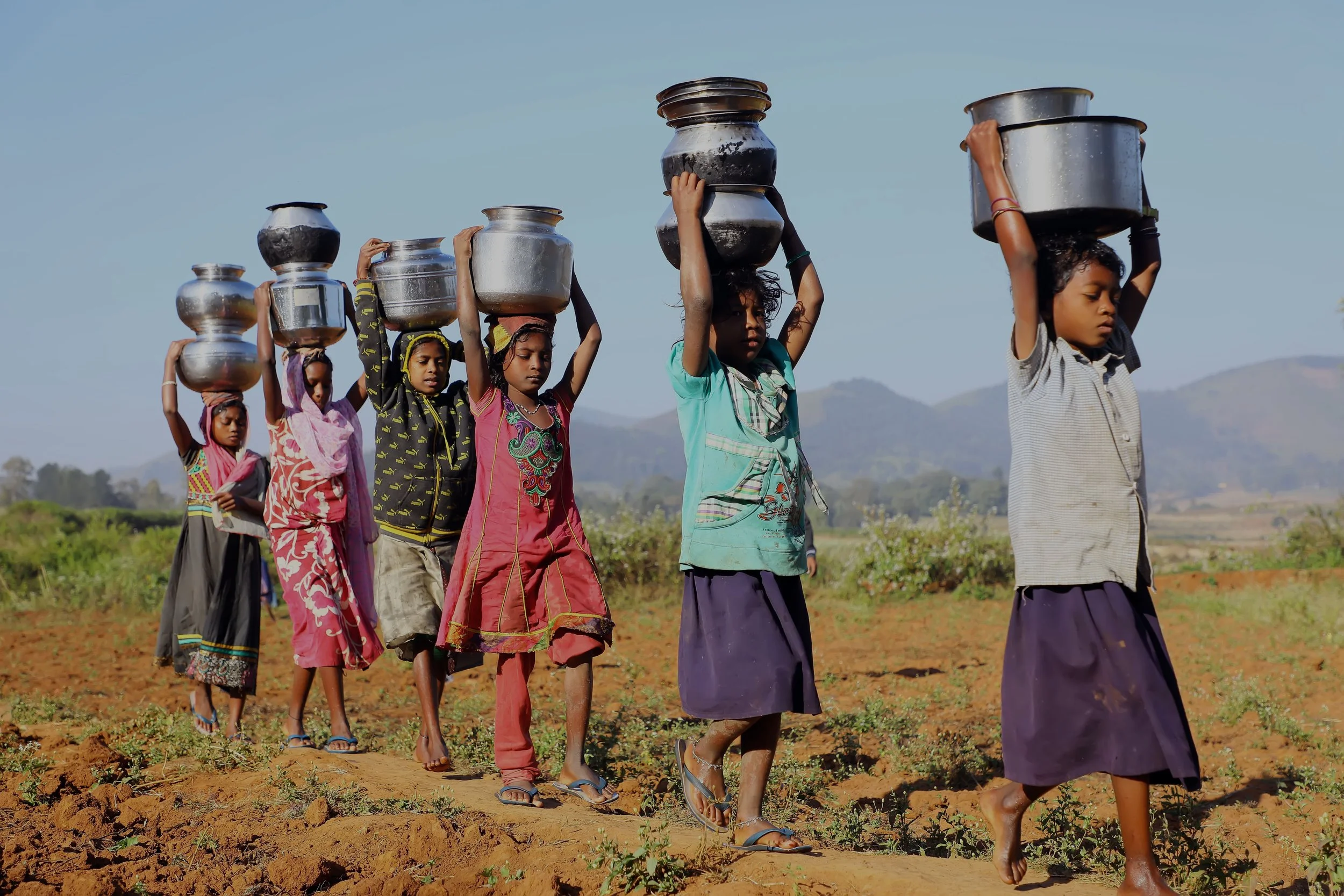
Photo by Siri Surender / Pexels
In recent years, an exceptionally strong El Niño has been labeled "Godzilla El Niño" to capture the scale of its potential impacts on people's lives. Forecasts by Indonesia's Meteorology, Climatology, and Geophysics Agency (BMKG) indicate a 100% probability of a weak El Niño, a 98% probability of a moderate event, and a 62% probability of a strong event in June 2026. At the same time, the Australian Monsoon is expected to remain active through at least the end of 2026 at near-normal intensity. The combination of these two conditions could intensify the dry season across many parts of Indonesia and increase the risk of widespread drought.
The greatest threat from El Niño does not end with a longer dry season. In Indonesia, the phenomenon has the potential to worsen long-standing challenges, including unstable food production in several regions, unequal access to nutritious food, and an increased risk of health problems among the most vulnerable communities. Rather than being solely a meteorological issue, El Niño has become a complex challenge that demands cross-sectoral preparedness.
Addressing these challenges requires more than improving agricultural practices or strengthening healthcare services separately. It calls for cross-sector collaboration that connects climate, food, and health data. In response to this urgency, a group of researchers introduced Climate-Smart Public Health (CSPH), a data-driven framework that integrates climate, environmental, and health information to detect risks, establish early warning systems, and support more resilient climate adaptation policies.
CSPH adopts an iterative approach that is continuously refined through input from local communities, healthcare professionals, researchers, and local governments.
Through this mechanism, the framework continuously adapts to evolving climate hazards while identifying community vulnerabilities at the local level.
At its core, CSPH utilizes data science and artificial intelligence (AI) to connect diverse sources of information, ranging from climate and environmental data to health records. This integration enables policymakers to detect risks earlier, anticipate their impacts on infectious diseases, non-communicable diseases, nutrition, and mental health, and develop more targeted policies before crises unfold.
As a case study, the researchers selected Madagascar, an island nation that shares several characteristics with Indonesia and is highly vulnerable to the impacts of climate change. Madagascar regularly experiences tropical cyclones, floods, heatwaves, and droughts. At the same time, widespread poverty and the fact that nearly half of its children are affected by stunting make its population even more prone to climate-related shocks.
The study shows that climate change in Madagascar does not merely alter weather patterns; it also triggers a chain of interconnected impacts.
Ocean warming reduces fish catches, limiting an important source of protein for coastal communities. Changes in atmospheric circulation intensify drought and suppress agricultural productivity. Deforestation and ecosystem degradation also increase the risk of vector-borne diseases, such as malaria, as well as water-related illnesses, including diarrhoeal diseases.
Indonesia could face a similar situation. Droughts and heatwaves can reduce agricultural production, diminish the nutritional quality of crops, and limit food diversity, ultimately worsening the nutritional status of communities, particularly among children. In addition, drought conditions make it more difficult for crops to absorb and distribute essential minerals from the soil, leading to lower concentrations of key micronutrients, especially zinc, iron, and protein. In other words, having enough food does not necessarily mean that the food consumed provides sufficient nutritional value to support public health. Lower protein and calorie intake can also increase the risk of stunting.
How can CSPH strengthen food systems and public health amid the climate crisis?
The first step in the CSPH framework is to establish an integrated surveillance system that connects climate, environmental, and public health data. One of the greatest challenges lies in the limited infrastructure and institutional capacity needed to continuously monitor the relationship between climate change and health trends–a challenge that Indonesia would likely face if such an approach were implemented.
To address this issue, the researchers developed a health database integrated with climate observations, field measurements, remote sensing data, and a range of climate analysis products. This integrated system enables policymakers to monitor public health conditions while anticipating emerging risks, allowing interventions to be planned more rapidly and based on evidence.
Like Indonesia, Madagascar relies heavily on agriculture. Over recent decades, climate change has intensified drought across southern Madagascar, leading to widespread crop failures. Declining soil moisture and rising temperatures during the growing season have been linked to lower yields of staple crops such as rice, maize, and cassava. To understand these relationships better, researchers trained deep learning models to identify rice paddies and monitor every stage of crop growth across growing seasons. This process allows the system to estimate cultivated areas, crop yields, and changes in agricultural productivity over time. The same approach is also applied to monitor harmful algal blooms (HABs), the excessive growth of algae in marine and freshwater ecosystems caused by rising water temperatures and changes in nutrient levels. These blooms can produce toxins that contaminate seafood and pose risks to human health.
However, collecting data alone is not enough. The next step is risk assessment to understand how climate-related pressures may affect public health. At this stage, socioeconomic factors also become a key consideration.
Once the surveillance and risk assessment systems are in place, CSPH moves to its third stage: establishing an early warning system. Its purpose is to help policymakers make informed decisions before a crisis unfolds. This capability is becoming increasingly relevant, as the development of the El Niño–Southern Oscillation (ENSO) can now be predicted up to approximately 18 months in advance. By making use of these forecasts, policymakers have sufficient time to anticipate the impacts on food systems and public health.
Eventually, the role of CSPH is to help policymakers monitor the potential impacts of climate change through data-driven decision-making.
The information generated can then be used to build more resilient food systems and public health systems. However, if this approach is to be implemented in Indonesia, data integration must go hand in hand with robust data governance and security. Data ownership should remain under the oversight of a designated public institution, public health data must be anonymised to protect individual privacy, and data access mechanisms should be governed in a transparent and accountable manner. In doing so, data can be harnessed to improve public health without compromising the public's right to personal data protection.
As these technologies continue to evolve, the use of artificial intelligence has also drawn criticism for its high energy consumption and potential contribution to carbon emissions. At first glance, this may seem contradictory. However, CSPH deliberately avoids using highly resource-intensive AI models.
Instead, the researchers utilize lightweight deep learning architectures specifically designed for remote sensing applications, enabling energy consumption to be reduced without compromising analytical performance. If adopted in Indonesia, ensuring that AI is used responsibly and within appropriate boundaries will be a shared responsibility.
As El Niño grows increasingly intense and extreme weather becomes more difficult to predict, policymakers can no longer rely solely on responding after disasters occur. A more anticipatory approach is needed, one that utilizes technological advances by integrating climate, food, and health data into a single decision-making framework. Climate-Smart Public Health offers a new direction: building resilience before the next crisis arrives.
References:
Amondo, E. I., Nshakira-Rukundo, E., & Mirzabaev, A. (2023). The effect of extreme weather events on child nutrition and health. Food Security. https://doi.org/10.1007/s12571-023-01354-8
Golden, C. D, Childs, M. L., Mudele, O. E., Andriamizarasoa, F. A., Bouley, T. A., De Nicola, G., Fontaine, M. A., Huybers, P. J., Mahatante, P. T., Rabemananjara, R., Rakotoarison, N., Ramambason, H. R., Ramihantaniarivo, H., Randriamady, H. J., Randriatsara, H., Ravelomanantsoa, M. A., Razafinimanana, A. K. S., Rigden, A. J., Shumake-Guillemot, J., … Dominici, F. (2025). Climate-smart public health for global health resilience. The Lancet Planetary Health, 101293. https://doi.org/10.1016/j.lanplh.2025.101293
Prediksi musim kemarau tahun 2026 di Indonesia (pemutakhiran Juni 2026). (2026). BMKG - Badan Meteorologi, Klimatologi, Dan Geofisika. https://www.bmkg.go.id/iklim/prediksi-musim-kemarau-tahun-2026-di-indonesia-pemutakhiran-juni-2026