
The potential of Indonesia’s Makan Bergizi Gratis program, if it is well designed for the youth
Makan Bergizi Gratis (MBG) has the potential to shape how young people understand what they consume. By integrating nutrition and food education into the school meal experience, MBG can develop a generation that is more aware of the food system and planetary health.
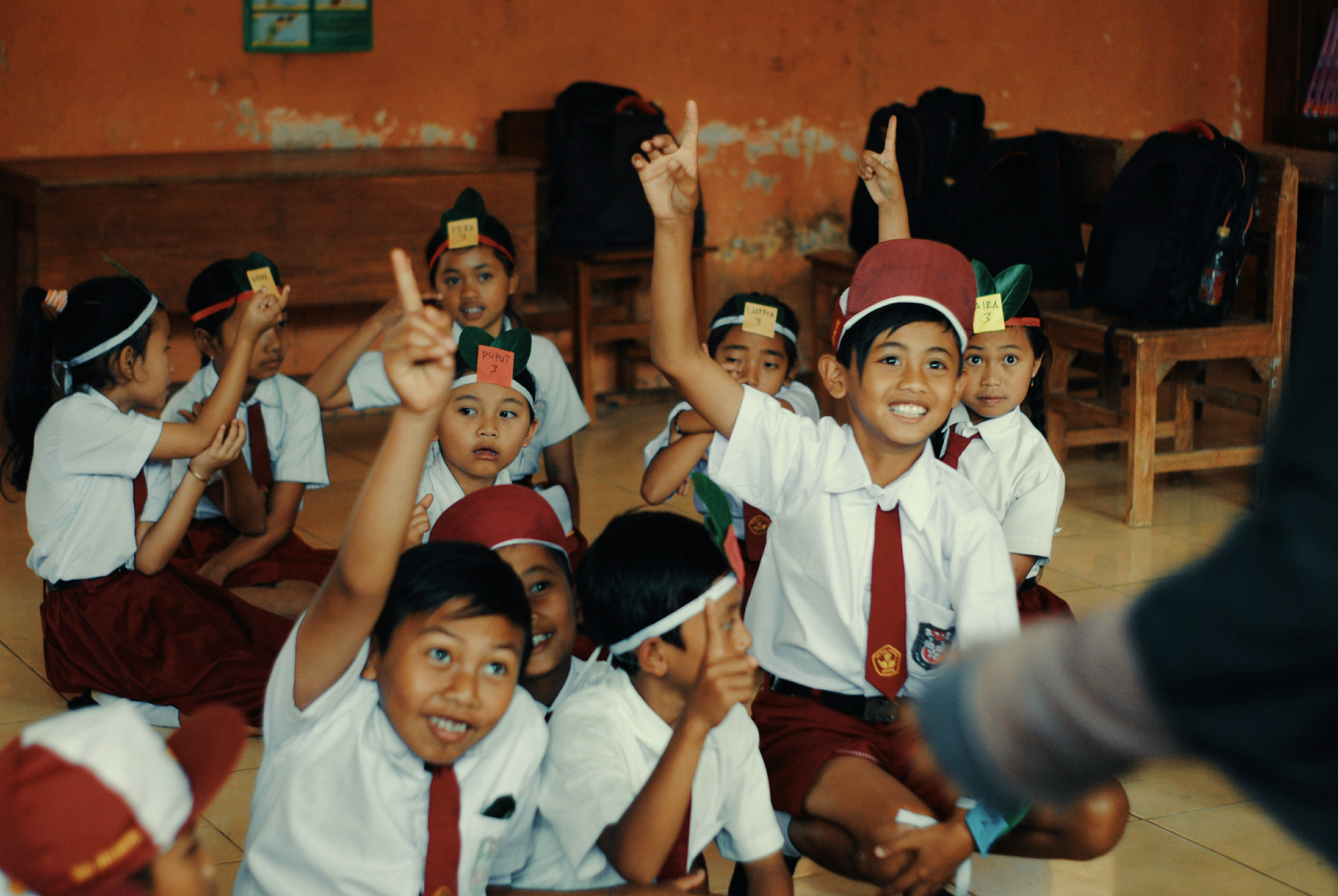
Photo by Husniati Salma / Unsplash
Whenever Indonesia’s Makan Bergizi Gratis (free nutritious meals) or MBG program comes under criticism, policymakers’ responses almost always revolve around two things: improving distribution or increasing the budget. Both solutions are based on the same assumption that the program’s main problem lies in its implementation. But what if the problem actually begins long before the food reaches students’ lunch tables?
The MBG program was introduced to ensure that children receive a meal for lunch every day. Yet in a country where nutrition and food education remain limited, particularly in schools, providing a meal should not be the program’s only objective. Every school mealtime has a far greater potential: it can become part of the learning process, where young people understand what they eat, why food matters to their health, and how food choices are connected to climate and planetary health.
The urgency of this issue is clear. Poor nutritional outcomes among children and young people are driven by the failure of food systems to consistently provide nutritious, safe, and affordable food, particularly for communities with limited resources.
When access to healthy food remains a luxury for many families, schools can be positioned to serve as spaces for intervention.
Global policy frameworks have long recognized nutrition and food education as an integral component of school meal programs. Nutrition and food education play an important role in encouraging healthier eating habits from an early age while also introducing more sustainable food consumption practices.
Effective nutrition and food education begins with designing learning experiences that equip young people with the knowledge, skills, and habits needed to make better food choices, ultimately cultivating a generation that understands the relationship between food and broader issues, such as climate change. However, such education cannot be applied uniformly across countries. The way young people learn about nutrition and food must be rooted in the context in which they live.
In Indonesia, MBG presents a significant opportunity to introduce the country’s rich diversity of local foods. School menus can become an entry point for introducing regional ingredients, harvest seasons, and the benefits of choosing local foods for farmers, national food security, and the climate. In doing so, lunchtime becomes an opportunity for students to understand where their food comes from and why those choices matter.
However, this connection cannot be built automatically. Several challenges stand in the way, ranging from inadequate nutritional quality of school meals and the perception that mealtimes should be separated from learning, to the belief that nutrition and food education merely adds to teachers’ workloads. This calls for the involvement of all stakeholders in delivering nutrition and food education, treating the entire school food system as part of the learning process while providing students with opportunities to participate actively and offer feedback on the program.
To realize this vision, a three-stage learning model can be applied: motivation, action, and reflection. These stages do not necessarily occur in sequence; rather, they overlap and reinforce one another as part of a continuous learning process. Their purpose is not only to increase students’ knowledge about food, but also to build habits that can be sustained throughout everyday life.
During the motivation stage, students are encouraged to recognise food-related issues, understand their implications for personal health, society, and the environment, and reflect on their own eating habits. Within the context of MBG, this stage can begin by introducing the local ingredients served each day. Such an approach can spark simple discussions about the origins of food and the issues surrounding it. In this way, lunchtime becomes an entry point for building food awareness.
The next stage is action, which places hands-on experience at the centre of learning. Students learn through practice, experiment with new habits, overcome barriers, and receive support from teachers, peers, and their families. MBG can provide opportunities for these experiences, for example by encouraging students to reduce food waste, observe the nutritional composition of their meals, or participate in evaluating the menus served. This process helps students apply what they have learned in their everyday lives rather than merely understanding the concepts.
The final stage is reflection: evaluating what students have learned, assessing the changes that have taken place, and sharing those experiences with friends, family members, and the wider school community. Through this process, learning has the potential to encourage healthier food cultures within schools. For MBG, reflection can also provide a platform for gathering students’ feedback on school menus, dining experiences, and program implementation, allowing them to become not only beneficiaries but also contributors to improving the policy.
In the end, the greatest challenge facing nutrition and food education lies in the low priority it receives within public policy. In Indonesia, MBG has the opportunity to fill this gap. With its nationwide reach and daily implementation in schools, the program can become an entry point for embedding nutrition and food education within the education system. However, this will only be possible if MBG is viewed as an investment in learning rather than merely a food provision program.
Achieving this goal also requires capacity building at every level. Teachers, curriculum developers, learning material designers, technical advisors, school meal program managers, and policymakers all need a shared understanding of how effective nutrition and food education should be designed and delivered.
The success of the MBG program should not be measured solely by the millions of meals it serves. It is equally important to assess the extent to which the program cultivates a generation that understands food, makes healthier dietary decisions, and sees itself as part of a more sustainable food system. Mindsets and habits are formed early in life. Therefore, sustained nutrition and food education are essential to prepare young people to become citizens who understand planetary health and recognize their responsibility to protect it in the future.
If every school mealtime can become an opportunity to learn, then MBG has the potential to become one of Indonesia’s most important educational policies: the one that nurtures a generation that is healthier, more aware, and more resilient in facing future food challenges.
References:
von Borries, R., Guinto, R., Thomson, D. J., Abia, W. A., & Lowe, R. (2020). Planting sustainable seeds in young minds: the need to teach planetary health to children. The Lancet Planetary Health, 4(11), e501–e502. https://doi.org/10.1016/s2542-5196(20)30241-2
Swensson, L. F. J., Hunter, D., Schneider, S., & Tartanac, F. (2021). Public food procurement as a game changer for food system transformation. The Lancet Planetary Health, 5(8), e495–e496. https://doi.org/10.1016/s2542-5196(21)00176-5
Vargas, M., Sánchez, C. Á., Tyler, V., & Hachem, F. (2025). Putting food at the centre of learning: an evidence-based and practice-informed model of holistic food education in schools. The Lancet Planetary Health. https://doi.org/10.1016/s2542-5196(25)00033-6